
The creator economy has transformed how individuals and businesses approach digital marketing. Whether you're managing a personal brand, building an influencer presence, or growing a business on platforms like TikTok, Instagram, or YouTube, understanding marketing fundamentals paired with social media expertise has become essential. Marketing and social media courses offer structured learning paths that help creators develop strategic thinking, master platform algorithms, and build sustainable growth strategies that translate directly into measurable results.
Why Creators Need Specialized Marketing Education
Traditional marketing education often focuses on corporate strategies that don't directly translate to the creator economy. Creators need specific knowledge about algorithm behavior, engagement metrics, content optimization, and community building. Marketing and social media courses designed for the modern digital landscape address these unique needs.
The gap between general marketing theory and practical social media execution creates challenges for creators trying to scale their presence. A course that combines marketing fundamentals with platform-specific tactics provides the most value. Understanding consumer psychology becomes just as important as knowing when to post or which hashtags drive discovery.
The Evolution of Social Media Marketing Education
Five years ago, social media marketing education centered primarily on Facebook and Instagram advertising. Today's landscape demands expertise across multiple platforms, each with distinct algorithms, content formats, and audience behaviors.
Key shifts in social media marketing education include:
- Platform diversification beyond traditional networks
- Short-form video optimization and strategy
- Algorithm literacy and content distribution mechanics
- Creator monetization and business model development
- Community management and audience retention techniques
- Cross-platform content repurposing strategies
Professional development in this field now requires ongoing learning rather than one-time certification. Platforms update their features, algorithms, and best practices quarterly, making continuous education essential for maintaining competitive advantage.
Core Components of Effective Marketing and Social Media Courses
Quality educational programs share several fundamental characteristics that separate them from basic tutorials or superficial overviews. When evaluating marketing and social media courses, creators should look for comprehensive curricula that balance theory with practical application.
Strategic Foundation and Planning
The best courses start with marketing fundamentals before diving into platform tactics. Understanding audience segmentation, value propositions, and positioning strategies creates a foundation for all tactical decisions. This strategic thinking helps creators differentiate themselves in crowded markets.
Content strategy development forms the backbone of successful social media presence. Courses should cover content pillars, editorial calendars, and how to align content with business objectives. Northwestern University's Medill School offers courses that teach design, management, and optimization of social campaigns for growth and brand positioning.
| Course Component | Beginner Focus | Advanced Focus |
|---|---|---|
| Strategy Development | Platform selection, basic positioning | Multi-platform integration, competitive analysis |
| Content Creation | Format basics, posting schedules | Production workflows, batch creation systems |
| Analytics | Vanity metrics, follower counts | Conversion tracking, ROI measurement |
| Community Management | Response protocols | Retention strategies, superfan cultivation |
Platform-Specific Tactics and Best Practices
While strategic thinking applies across platforms, execution requires platform-specific knowledge. Marketing and social media courses should provide detailed guidance on major platforms including TikTok, Instagram, YouTube, Twitter, and emerging networks.
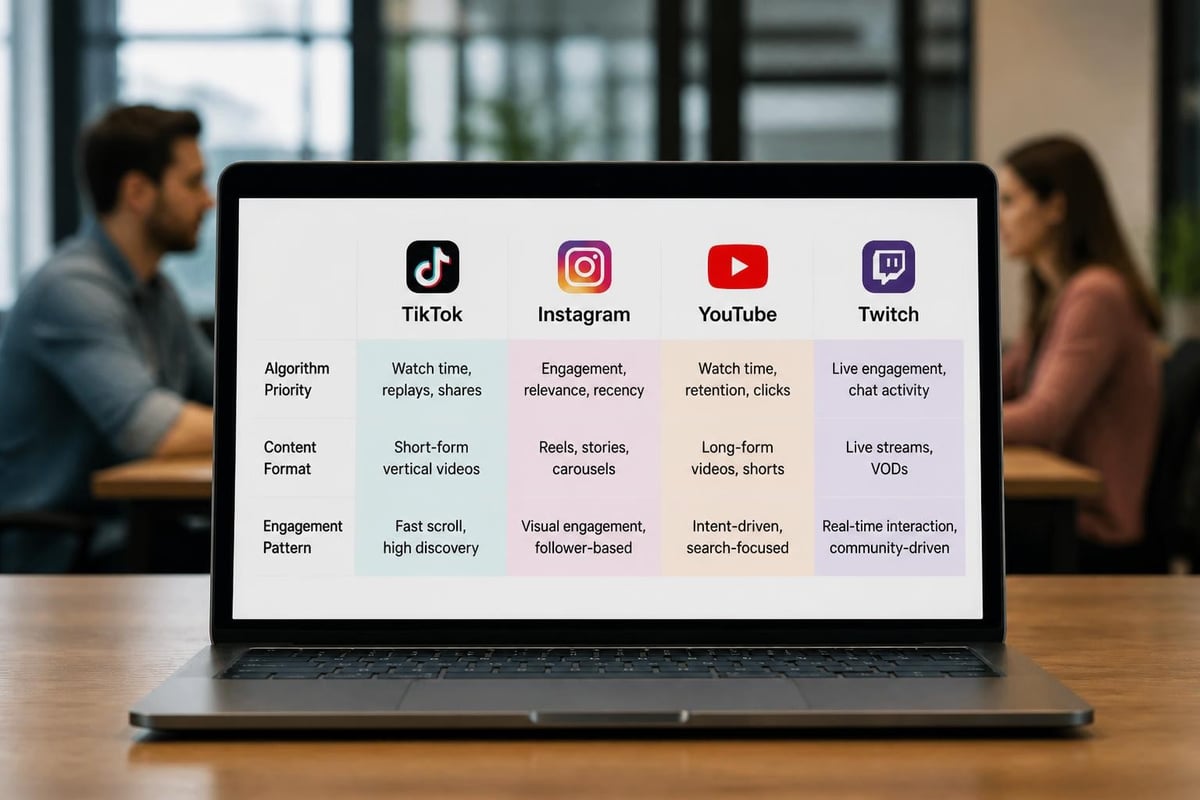
Each platform rewards different content types and engagement patterns. TikTok prioritizes watch time and completion rates. Instagram values saves and shares. YouTube focuses on session time and click-through rates. Understanding these nuances allows creators to optimize content for each platform's unique algorithm.
Platform-specific learning should include:
- Algorithm mechanics and content distribution systems
- Native features and how to leverage them for reach
- Audience behavior patterns unique to each platform
- Monetization options and requirements
- Content format specifications and technical requirements
The relationship between content quality and engagement metrics like views directly impacts how algorithms promote content. Courses that explain these connections help creators make informed production decisions.
Measuring Success: Analytics and Performance Optimization
Data literacy separates creators who guess from those who grow strategically. Marketing and social media courses must teach analytics interpretation, performance measurement, and optimization methodologies that drive continuous improvement.
Understanding Meaningful Metrics
Not all metrics carry equal weight. Follower counts create social proof but don't necessarily indicate business health. Semrush Academy provides free courses designed to help learners attract customers and build loyalty through strategic social media approaches focused on growth metrics that matter.
Engagement rate, audience retention, conversion rate, and lifetime value represent more meaningful indicators of social media success. Courses should teach how to track these metrics, establish benchmarks, and identify improvement opportunities.
- Reach metrics: Impressions, unique viewers, discovery sources
- Engagement metrics: Likes, comments, shares, saves, completion rate
- Conversion metrics: Click-through rate, sign-ups, sales, email captures
- Retention metrics: Return viewers, subscription rate, unfollow rate
- Business metrics: Cost per acquisition, customer lifetime value, ROI
A/B Testing and Optimization Frameworks
Systematic testing separates effective creators from those relying on intuition alone. Marketing and social media courses should teach hypothesis formation, test design, statistical significance, and implementation of winning variations.

Testing variables might include posting times, content formats, thumbnail designs, hook strategies, call-to-action placement, or caption styles. Documenting results and building institutional knowledge accelerates growth over time. Tools like RankPill help creators optimize content for search engines and AI discovery, complementing social media strategies with SEO-driven traffic growth.
Building Sustainable Content Systems
One-off viral hits don't build businesses. Sustainable growth requires systems that produce consistent quality while remaining manageable long-term. Marketing and social media courses should address workflow development, content batching, repurposing strategies, and team building.
Content Production Workflows
Professional creators treat content production as a manufacturing process with defined stages, quality controls, and efficiency measures. Establishing workflows reduces decision fatigue and maintains output consistency even during creative dry spells.
A typical content workflow includes:
- Ideation and research: Trend monitoring, audience feedback analysis, competitor research
- Planning and scripting: Outline development, script writing, shot list creation
- Production: Filming, recording, graphic design, asset creation
- Post-production: Editing, color correction, sound mixing, thumbnail design
- Publishing and optimization: Upload, metadata optimization, scheduling
- Promotion and engagement: Cross-platform sharing, comment responses, community interaction
- Analysis and iteration: Performance review, insight extraction, strategy adjustment
Batching similar tasks improves efficiency dramatically. Recording multiple videos in one session, editing in focused blocks, or scheduling posts weekly rather than daily reduces context switching and preserves creative energy.
Cross-Platform Content Repurposing
Creating platform-specific content from scratch for every network becomes unsustainable quickly. Smart repurposing strategies extract maximum value from each piece of content created. Harvard's marketing courses cover brand management and digital strategies that help creators maintain consistency across platforms while adapting content appropriately.
A single long-form YouTube video can become:
- Multiple TikTok clips highlighting key points
- Instagram Reels featuring the most engaging segments
- Twitter thread summarizing main takeaways
- Blog post transcript with additional context
- Email newsletter content for subscribers
- Podcast episode audio version
This approach maximizes content ROI while maintaining platform-appropriate formatting and optimization.
Monetization Strategies and Business Development
Understanding how to convert audience into income represents a critical gap in many creator educations. Marketing and social media courses should address multiple revenue streams, pricing strategies, and business model development specific to the creator economy.
Revenue Stream Diversification
Relying on a single income source creates vulnerability. Platform algorithm changes, policy updates, or market shifts can devastate creators dependent on one revenue stream. Diversification provides stability and growth potential.
| Revenue Stream | Scalability | Setup Complexity | Income Stability |
|---|---|---|---|
| Platform Ad Revenue | High | Low | Variable |
| Brand Partnerships | Medium | Medium | Variable |
| Digital Products | High | High | Stable |
| Online Courses | High | High | Stable |
| Membership/Subscription | Medium | Medium | Very Stable |
| Consulting Services | Low | Low | Stable |
| Affiliate Marketing | High | Low | Variable |
Many creators combine multiple streams to balance stability with growth potential. A creator might maintain platform ad revenue for baseline income while building digital products for higher margins and membership programs for predictable monthly revenue.
Building Authority and Premium Offerings
As creators develop expertise, they can command premium pricing for specialized knowledge or access. Marketing and social media courses teach how to position expertise, create compelling offers, and build sales funnels that convert followers into customers.
The journey from content creator to authority figure requires consistent value delivery, expertise demonstration, and strategic personal brand development. When creators understand social media marketing from an agency perspective, they can apply professional frameworks to their personal brand development.

Selecting the Right Marketing and Social Media Courses
With countless educational options available, choosing courses that match your current skill level, learning style, and business goals requires careful evaluation. Not all marketing and social media courses deliver equal value or relevance to creator-specific challenges.
Accreditation and Instructor Credentials
Course quality correlates strongly with instructor experience and institutional reputation. Oregon State University offers comprehensive courses covering audience targeting, content creation, community management, and performance measurement from experienced marketing professionals.
Look for instructors with demonstrated success in the creator economy, not just traditional marketing backgrounds. Someone who has built audiences, secured brand deals, or scaled creator businesses brings practical insights that academic theory alone cannot provide.
Evaluation criteria for course selection:
- Instructor track record and verifiable results
- Curriculum relevance to current platform realities
- Student success stories and testimonials
- Update frequency reflecting platform changes
- Community access for peer learning and networking
- Support availability for questions and troubleshooting
Free vs. Paid Educational Resources
Budget constraints often push creators toward free resources, which can provide substantial value when selected strategically. Marketing Made Clear compiles free, high-quality courses, tools, and communities that help individuals build practical marketing skills from home.
Free courses work well for foundational knowledge and platform-specific tactics. However, paid programs typically offer more comprehensive curricula, personalized feedback, community access, and implementation support that accelerates results.
| Resource Type | Best For | Limitations |
|---|---|---|
| Free Courses | Fundamentals, platform basics, exploration | Limited depth, no support, outdated content |
| Paid Courses | Comprehensive learning, certification, structured paths | Cost barrier, variable quality |
| Coaching Programs | Personalized guidance, accountability, fast results | High cost, availability constraints |
| Books | Deep theoretical knowledge, reference material | Lacks interactivity, becomes outdated |
| Communities | Peer learning, networking, ongoing support | Inconsistent quality, time investment |
For creators building Instagram engagement or expanding across multiple platforms, investing in quality education typically generates positive ROI through improved strategy and execution efficiency.
Implementing Learning into Practice
Knowledge without application generates no results. The gap between course completion and implementation defeats many creators. Marketing and social media courses should include action plans, templates, and accountability mechanisms that drive execution.
Creating Your Implementation Roadmap
Breaking course content into actionable steps prevents overwhelm and builds momentum through small wins. After completing a marketing and social media course, create a 90-day implementation plan prioritizing high-impact activities.
- Audit current state: Document existing metrics, content quality, posting consistency, and engagement patterns
- Identify quick wins: Select 3-5 tactical changes that can be implemented immediately with minimal resource investment
- Prioritize skill development: Choose 2-3 skills that will generate the most significant impact and dedicate focused practice time
- Build systems: Establish workflows, templates, and processes that ensure consistency
- Schedule review cycles: Weekly performance reviews and monthly strategy adjustments based on data
- Expand gradually: Layer new tactics and platforms only after achieving consistency with core activities
Creators often struggle with initial visibility when implementing new strategies. Services that provide TikTok Followers can help establish social proof while organic growth strategies gain traction, creating momentum that accelerates the learning curve.
Accountability and Continuous Learning
The creator landscape evolves constantly, requiring ongoing education beyond any single course. Building accountability structures and committing to continuous learning separate thriving creators from those who plateau.
Join creator communities, mastermind groups, or accountability partnerships that provide feedback, motivation, and perspective. Regular knowledge sharing with peers at similar or advanced stages accelerates learning and reveals blind spots in your strategy.
Continuous learning habits include:
- Weekly industry news consumption and trend analysis
- Monthly deep dives into one platform update or new feature
- Quarterly skill assessments and gap identification
- Annual strategy reviews and goal setting
- Regular experimentation with new formats and platforms
The American Marketing Association offers on-demand courses that integrate social media with broader marketing channels, helping creators understand how different marketing elements work together for comprehensive growth strategies.
Advanced Strategies for Experienced Creators
After mastering fundamentals, experienced creators benefit from advanced marketing and social media courses that address scaling challenges, team building, and sophisticated growth tactics unavailable to beginners.
Scaling Beyond Personal Capacity
Individual creators eventually hit time constraints that limit growth. Advanced courses should teach delegation, team building, standard operating procedure development, and quality control systems that maintain brand consistency while increasing output.
Building a team might start with virtual assistants handling administrative tasks, then expand to editors, thumbnail designers, content writers, or community managers. Each role requires clear expectations, training systems, and performance metrics.
Multi-Platform Integration Strategies
Rather than treating each platform as isolated, advanced creators develop integrated strategies where platforms serve specific functions within a broader ecosystem. YouTube might host long-form content, TikTok drives discovery, Instagram builds community, and email captures and nurtures the audience.
This strategic approach requires understanding each platform's strengths, audience overlap patterns, and cross-promotion mechanics. Content gets optimized for its native platform while driving traffic systematically through the ecosystem toward monetization points.
Creators seeking to expand their YouTube presence or boost Instagram views can accelerate growth while implementing advanced multi-platform strategies through targeted engagement services that complement organic efforts.
Building Your Marketing Education Foundation
Starting your marketing education journey requires clarity about your current position, desired outcomes, and available resources. Whether you're just beginning your creator journey or scaling an established presence, selecting appropriate marketing and social media courses accelerates progress toward your goals.
Begin by assessing your current knowledge gaps. Do you struggle with content strategy, platform algorithms, analytics interpretation, or monetization? Different courses emphasize different aspects of the creator business, so matching course strengths to your specific needs maximizes learning efficiency.
Mt. San Antonio College provides introductory certificates exposing students to marketing fundamentals and social media's role, offering an accessible entry point for creators seeking structured foundational education.
Consider your learning style preferences when selecting courses. Some creators thrive with video-based instruction, while others prefer written materials, interactive workshops, or hands-on projects. The most effective course is one you'll actually complete and implement, regardless of its reputation or price point.
Budget allocation for education represents an investment in your creator business. While free resources provide value, paid courses often deliver faster results through comprehensive curricula, expert feedback, and community support that accelerates implementation and troubleshooting.
Investing in quality marketing and social media courses provides creators with strategic frameworks, platform-specific tactics, and business development skills that drive sustainable growth. The combination of marketing fundamentals with social media expertise creates a competitive advantage in the increasingly crowded creator economy. Viewpals sells promotion across TikTok, YouTube, Instagram, Twitch and Spotify, with a 14-day money-back guarantee and a 14-day refill guarantee, for when you are ready to put what you learn into practice.